Restoring Hotel Spaces After Long-Term Closures
- Restoration Services

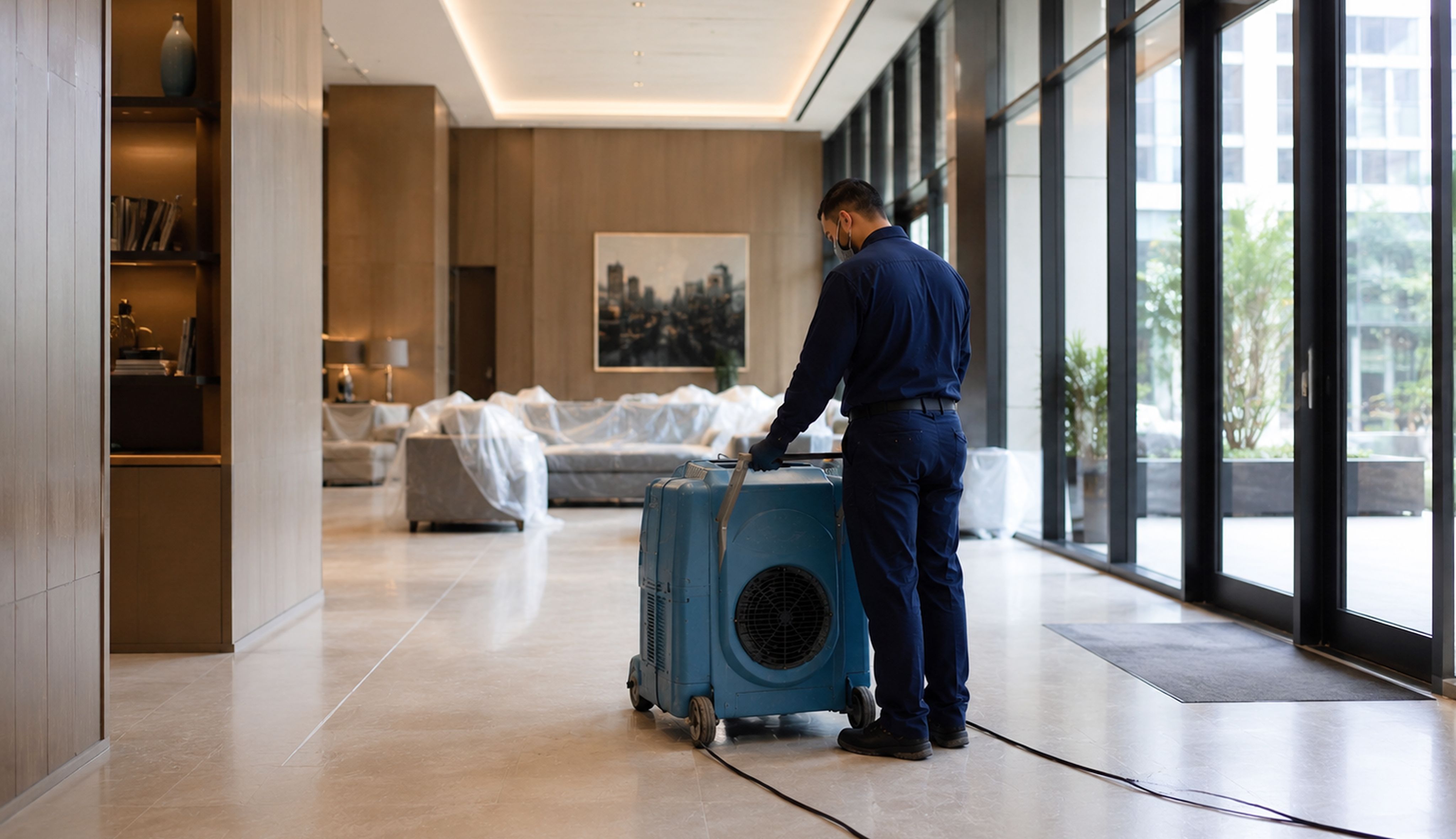
Hotel restoration after a long-term closure is a different challenge from routine maintenance — and treating it as such is where reopening plans break down. Months of inactivity create compounding problems across surfaces, air systems, plumbing, and guest-facing spaces that require a structured, professionally managed approach to resolve. This guide outlines the key priorities, strategies, and professional cleaning practices to restore closed hotel properties to a safe, brand-ready condition.
The Unique Challenges of Long-Term Closure Cleanup
A hotel that has been closed for months does not simply need a deep clean — it needs a full diagnostic assessment followed by targeted remediation. Stagnant air systems accumulate dust, mold spores, and microbial growth without regular filtration cycles. Plumbing lines pose a Legionella risk when water sits still. Surfaces accumulate settled particulate that standard cleaning products and timelines cannot efficiently address.
Pest activity is another underestimated factor. Rodents, insects, and birds quickly exploit unoccupied spaces, leaving contamination that requires both remediation and structural inspection. Long-term closure cleanup must account for all of these compounding conditions before a single guest room is considered ready.
Key Takeaway: Extended closures create layered contamination problems that go far beyond surface dirt. A thorough assessment before cleanup begins is what separates a safe reopening from one that creates liability.
Long-Term Closure Cleanup Priorities for Safe Reopening
Not everything can be addressed simultaneously, so prioritization matters. The sequence for reopening hotels safely should move from life-safety systems outward to guest-facing spaces.
Start with mechanical and environmental systems: HVAC inspection and filter replacement, water system flushing and Legionella testing, and fire suppression system verification. These are non-negotiable before any staff or guests occupy the building. Next, address structural and surface conditions — checking for moisture intrusion, mold growth, and pest damage — before moving into the deep cleaning phase. Guest rooms, lobbies, food and beverage areas, and fitness spaces each carry their own contamination profiles and should be cleaned, sanitized, and inspected in a documented sequence.
Key Takeaway: Safe hotel reopening follows a life-safety-first sequence. Mechanical systems, water quality, and structural integrity must be cleared before surface restoration and guest-space cleaning begin.
How Professional Cleaning Restores Air Quality, Surfaces, and Systems
The scale and specificity of long-term closure conditions make professional cleaning essential — not optional. General-purpose cleaning staff and standard supplies are not equipped to remediate mold, test water systems, or restore air quality in commercial HVAC environments.
Professional hotel maintenance services bring industrial-grade equipment, trained technicians, and documented protocols to each phase of the restoration. Air scrubbers and HEPA filtration units remove airborne particulate and mold spores that standard vacuuming leaves behind. Electrostatic sprayers apply EPA-registered disinfectants to complex surface geometries that manual wiping misses. Upholstery, carpeting, and soft furnishings require extraction-level cleaning to remove embedded contaminants that have settled over months of inactivity.
Documented professional cleaning also creates a paper trail that protects the property legally and operationally — a record that systems were tested, surfaces were treated, and standards were met before guests arrived.
Key Takeaway: Professional cleaning restores what general maintenance cannot reach. Industrial equipment, trained staff, and documented protocols are what make a hotel restoration safe and defensible.
Property Restoration Strategies That Protect Brand Reputation
A hotel's reopening is a brand moment — and how the property looks, smells, and functions on day one shapes the first wave of post-closure reviews. Property restoration strategies need to account for guest perception, not just operational compliance.
Walk the property as a guest would before declaring it ready. Inspect lighting, signage, soft furnishings, and amenities for any condition that signals neglect rather than renewal. Replace consumables entirely rather than topping them off. Address any cosmetic damage — scuffed walls, stained grout, tarnished fixtures — that a returning guest would notice and photograph. Communicate proactively with guests and travel partners about the restoration process and the standards applied, because transparency builds more confidence than silence.
A property that reopens visibly well-restored recovers its reputation faster and holds it longer than one that cuts corners under deadline pressure.
Key Takeaway: Hotel restoration is a brand investment, not just a cleaning project. Properties that reopen to a demonstrably high standard protect their reputation from the first review forward.
Setting the Standard Before the First Guest Arrives
Reopening a hotel after extended closure is an opportunity to reset — not just to clean. The properties that use that window to address deferred maintenance, document their systems, and restore every guest-facing space to a high standard are the ones that return to full occupancy faster. A structured hotel restoration plan, executed by experienced hotel maintenance services with clear priorities and professional cleaning at its core, is what makes that outcome achievable.

Let’s Become Partners
From short-term help to long-term staff members for your hotel, restaurant, or other establishments, we can get you the staffing you need. Contact us today!