Restoration Services: Rapid Response After Water Damage in Hotels
- Restoration Services

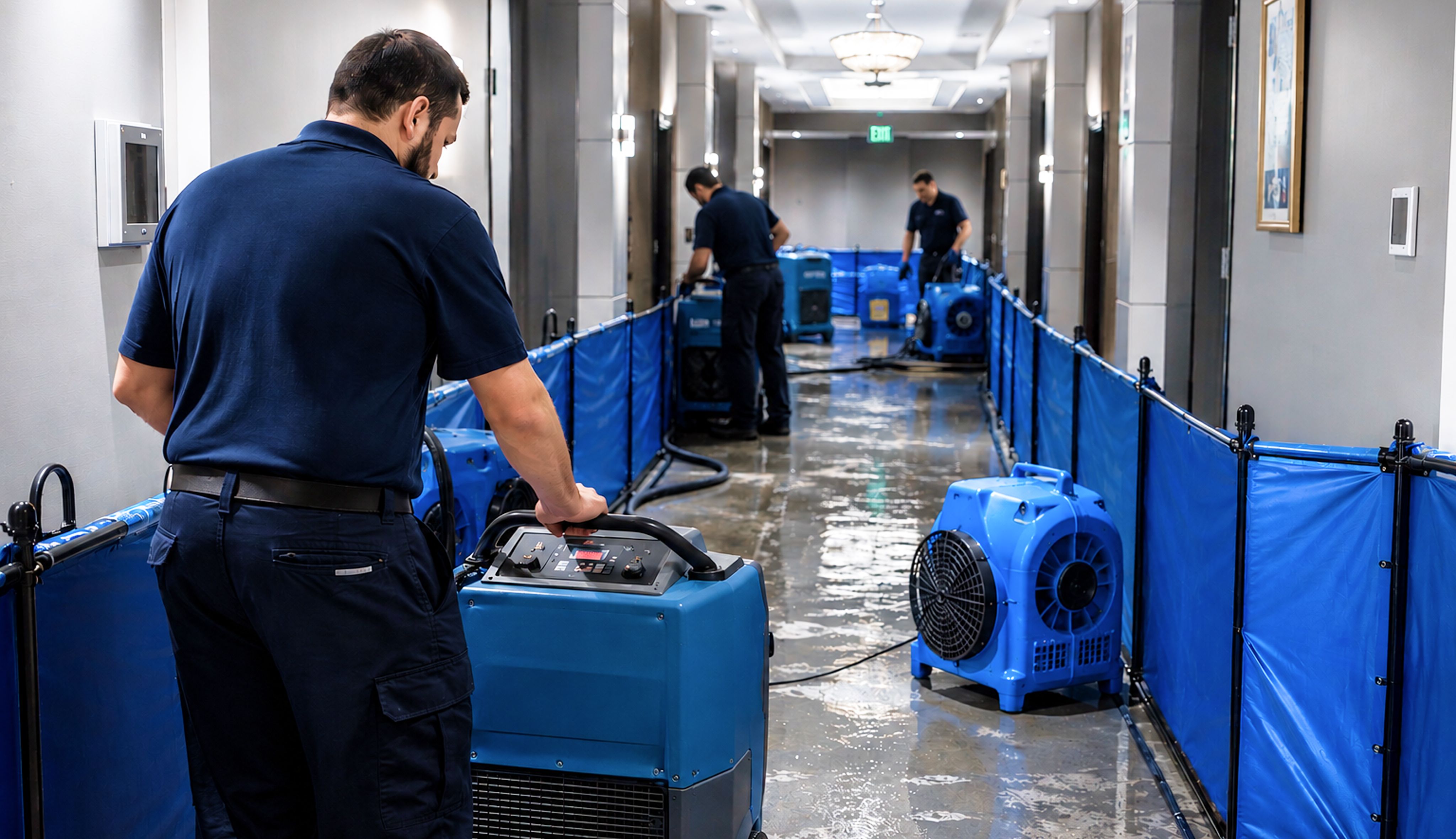
Water damage in a hotel doesn't just ruin a room — it threatens revenue, guest trust, and your property's reputation. Every hour of inaction compounds the problem, turning a manageable incident into a costly, multi-week shutdown. Hotel restoration services exist to close that gap: rapid, coordinated emergency restoration that gets your property back to full operation before the damage spreads.
The Risks of Delayed Water Damage Cleanup in Hospitality Settings
In a hotel, water moves fast and hides well. A burst pipe, a failed appliance, or a roof breach can saturate flooring, drywall, and insulation within hours. By the time visible damage appears, structural materials and HVAC systems may already be compromised.
The hospitality environment makes delays especially costly. Guest rooms, lobbies, and food service areas are interconnected, so damage in one zone often spreads to adjacent areas. Standing water in a corridor or ceiling void creates conditions for mold growth within 24 to 48 hours — a secondary problem that extends remediation timelines and costs.
Delayed water damage cleanup also creates liability exposure. Wet floors and weakened surfaces put guests and staff at risk, and the longer the hazard persists, the harder it becomes to demonstrate timely, reasonable action to insurers or regulators.
Key Takeaway: In a hotel, delayed water damage cleanup rarely stays contained. Structural deterioration and mold risk escalate quickly, making a rapid response the lowest-cost option.
How Emergency Restoration Minimizes Downtime and Revenue Loss
Emergency restoration is designed around speed and triage. When a professional restoration team arrives, the first priority is stopping active water intrusion, then extracting standing water and beginning the drying process. Industrial-grade equipment — dehumidifiers, air movers, moisture meters — gets deployed immediately, often before a damage assessment is complete.
This staged approach protects the unaffected portions of your property. Restoration crews establish containment zones to prevent cross-contamination, allowing unaffected floors or wings to remain operational while remediation proceeds in isolated areas. For a hotel, maintaining partial occupancy during emergency restoration can mean the difference between a recoverable incident and a financial crisis.
Coordinating with your insurance carrier from the outset also accelerates timelines. Reputable restoration providers document damage thoroughly from day one, providing the evidence chain insurers need to process claims without unnecessary delays.
Key Takeaway: Emergency restoration limits revenue loss by keeping unaffected areas of the hotel open and moving through remediation in parallel with ongoing operations wherever possible.
The Role of Professional Cleaning in Hotel Restoration Services
Once structural drying is complete, professional cleaning makes a room habitable again — not just dry. Water damage cleanup leaves behind residue, contaminants, and odors that standard housekeeping cannot resolve. Restoration-grade professional cleaning involves antimicrobial treatment of affected surfaces, deep cleaning of soft furnishings and carpeting, air scrubbing for particulate and odor control, and sanitation of any areas exposed to sewage or gray water.
In a hospitality setting, guest-ready appearance is non-negotiable. A room that smells of moisture or shows staining — even after drying — will generate negative reviews and erode brand trust. Professional cleaning bridges the gap between structural remediation and the presentation standard your guests expect.
Key Takeaway: Professional cleaning is the final, non-negotiable step in hotel restoration services. It restores appearance, eliminates biological contaminants, and ensures rooms meet the hospitality standard guests require before checkout.
Coordinating Property Restoration with Ongoing Hotel Maintenance
Effective property restoration doesn't operate in isolation — it integrates with your existing hotel maintenance program. The best restoration partners communicate directly with your facilities team, sharing moisture readings, drying logs, and clearance timelines so maintenance staff can schedule follow-on work (repainting, fixture replacement, carpet reinstallation) without gaps or delays.
This coordination also creates an opportunity to identify underlying maintenance issues that contributed to the damage — aging plumbing, compromised roof membranes, or failed appliance seals. Addressing those root causes during the restoration window prevents repeat incidents and reduces long-term property risk.
Restoration teams that understand the rhythm of hotel operations — shift changes, check-in cycles, food service schedules — can sequence work to minimize guest disruption and keep your maintenance team on track.
Key Takeaway: Property restoration works best when it runs parallel to hotel maintenance, not after it. Early coordination between restoration crews and facilities teams shortens overall recovery timelines and surfaces the root causes worth fixing.
Act Before the Damage Spreads
Water damage in a hotel is a time-sensitive event. The gap between a fast, coordinated emergency restoration response and a delayed one is measured in weeks of lost revenue, exponentially higher remediation costs, and the guest trust that's difficult to rebuild once it's been lost.
Professional hotel restoration services provide triage, equipment, cleaning expertise, and documentation support that hospitality properties need to recover quickly and completely. If your property has experienced water damage — or you want to establish a pre-loss relationship with a qualified restoration provider — contact our team today to discuss your options.

Let’s Become Partners
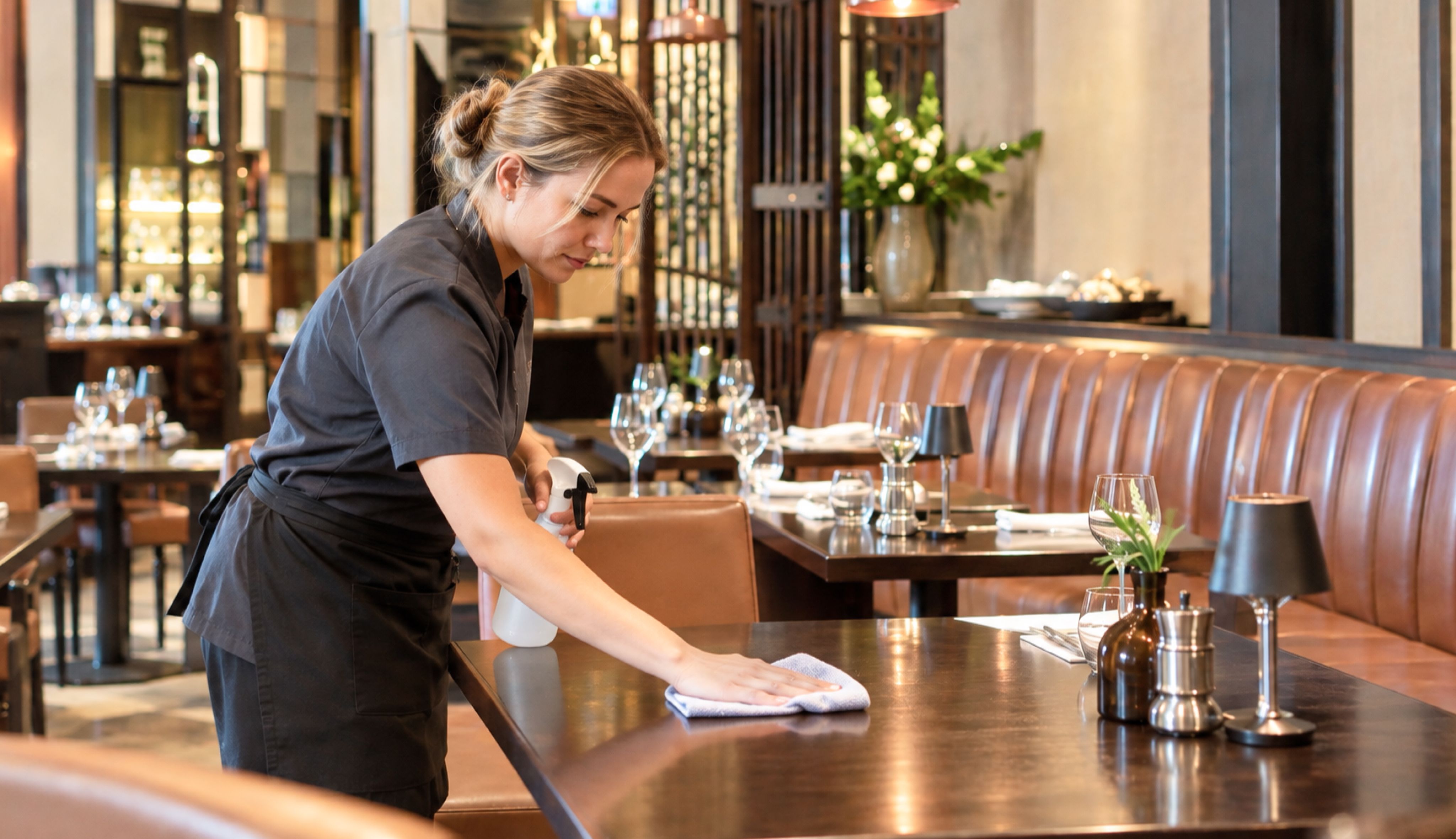
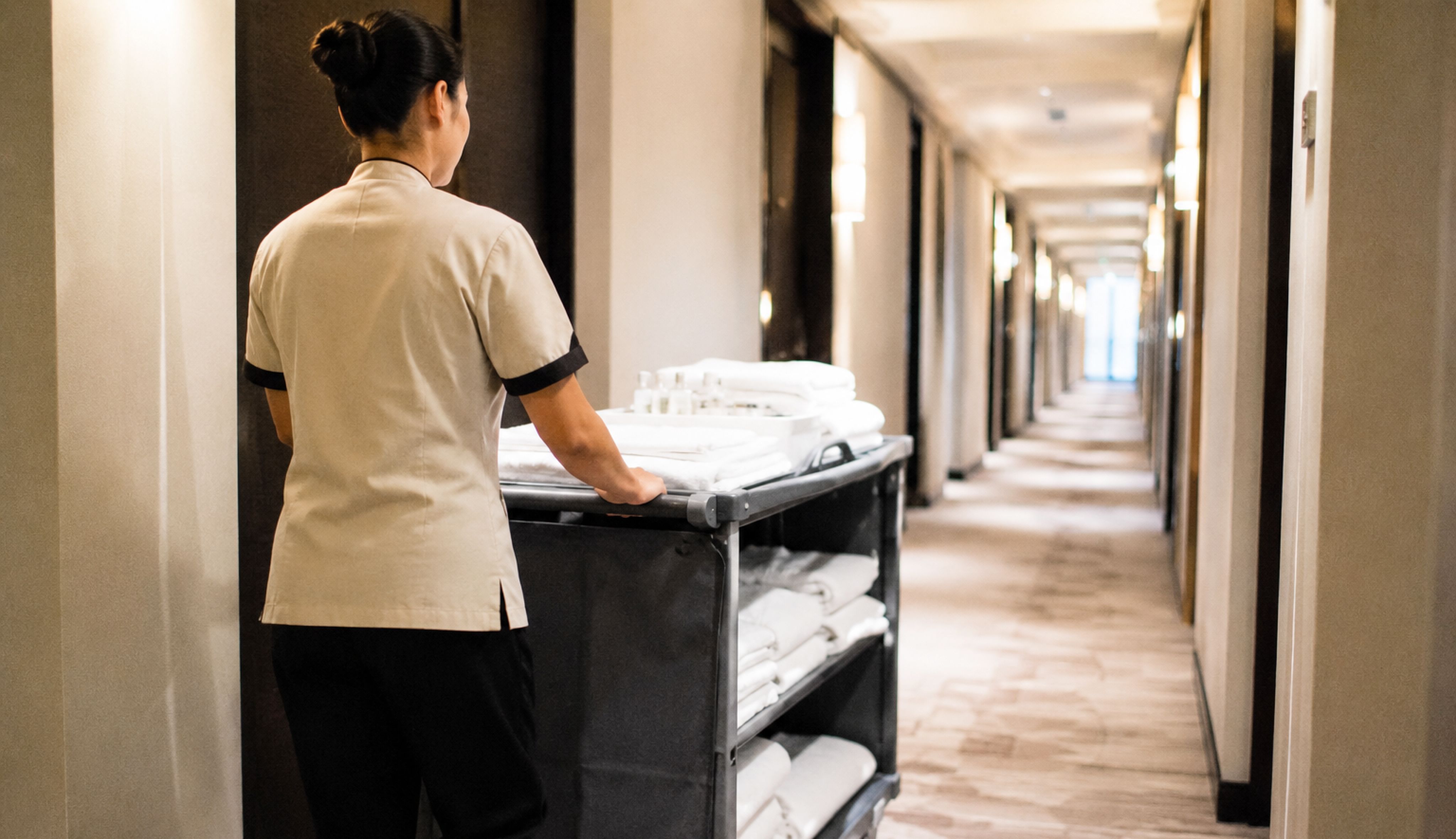
From short-term help to long-term staff members for your hotel, restaurant, or other establishments, we can get you the staffing you need. Contact us today!