How Proper Commercial Kitchen Cleaning Extends Equipment Life
- Restaurant Cleaning

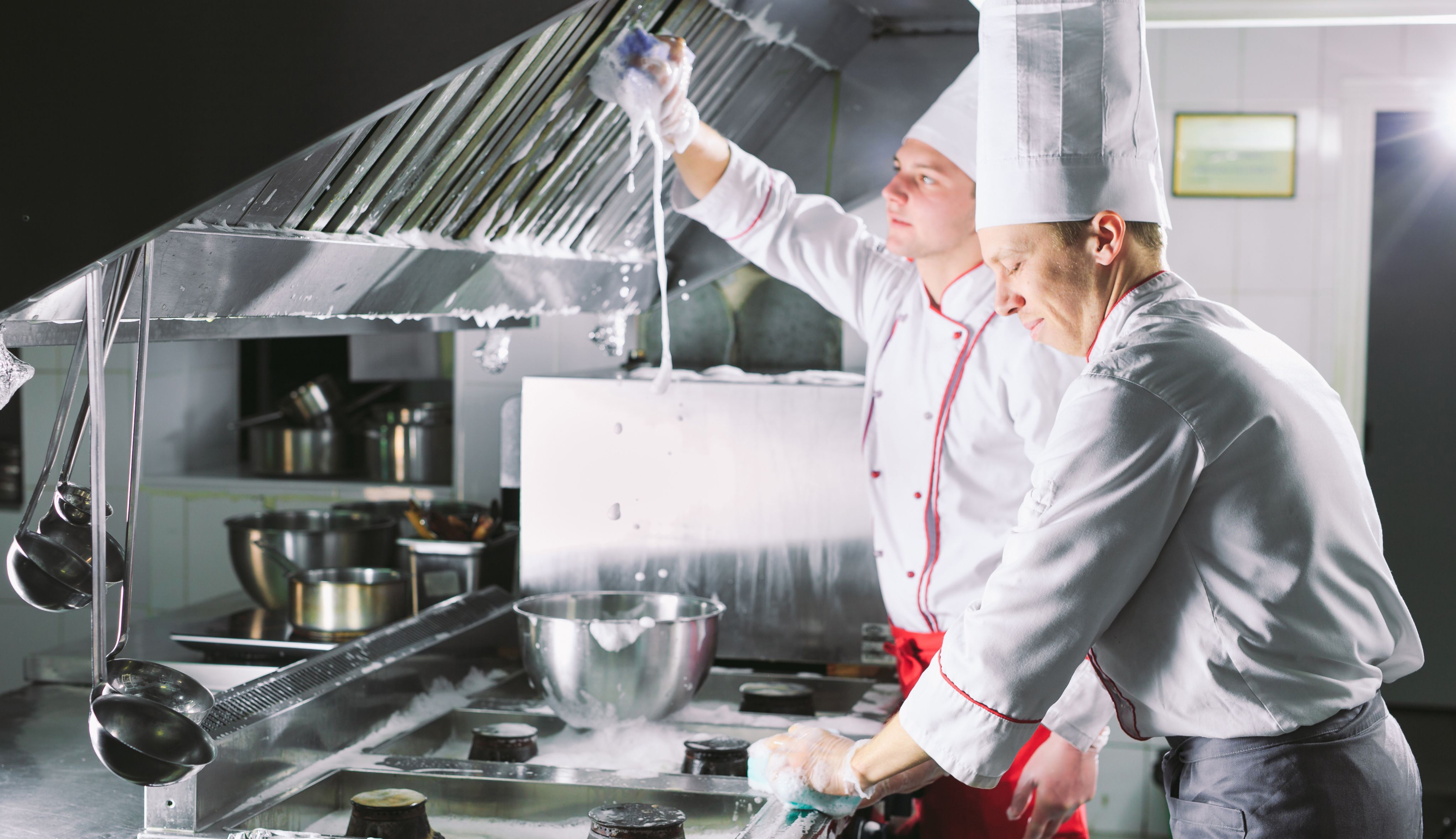
Proper commercial kitchen cleaning extends equipment life by removing the grease, scale, and food residue that corrode metal, restrict airflow, and overwork motors and compressors. Every fryer, combi oven, and walk-in cooler is a capital investment, and neglect shortens its service life well before the manufacturer's estimate. At Hotel Cleaning Services (HCS), we have provided professional kitchen cleaning for five-star and five-diamond properties since 1983, and our protocols treat every surface as an asset worth preserving.
What Does Neglected Kitchen Equipment Really Cost?
Neglected kitchen equipment costs operators through higher energy bills, more frequent repairs, and premature replacement. Grease baked onto fryer baskets, griddle plates, and hood filters traps heat and moisture, accelerating corrosion on stainless steel, hinges, and seals.
ENERGY STAR reports that refrigeration uses about 44% of a commercial kitchen's electricity, citing U.S. Energy Information Administration data. Clean condenser and evaporator coils can save an average-sized food service facility close to $1,000 per year, and ENERGY STAR found that basic coil cleaning cut energy use by 2% to 49%.
What Should Daily, Weekly, and Monthly Kitchen Cleaning Protocols Include?
An effective commercial kitchen maintenance program assigns every piece of equipment a fixed interval, matched to the property's menu and cooking volume.
- Daily: Wash, rinse, and sanitize prep tables, slicers, and cutting boards: Degrease griddles, empty fryer crumb trays, and clean floors with a food-safe degreaser.
- Weekly: Boil out fryers, descale dish machines and steamers, clean oven interiors, wash hood filters, and wipe refrigerator gaskets.
- Monthly: Clean behind and beneath the cooking line, scrub floor drains, and clean condenser coils at least quarterly.
Pro Tip: Schedule deep kitchen equipment cleaning overnight, after final service. Equipment cools safely, degreasers achieve full dwell time, and the culinary team opens to a pristine clean kitchen.
Which Degreasers and Sanitizers Are Safe for Commercial Kitchens?
Commercial kitchens should pair food-safe degreasers for soil removal with EPA-registered sanitizers applied at label concentration. The FDA Food Code requires surfaces to be washed, rinsed, and then sanitized, because grease and food soil weaken sanitizers.
Under FDA Food Code section 4-602.11, food-contact surfaces in continuous use with time/temperature control for safety (TCS) foods must be cleaned and sanitized at least every four hours. Chlorine sanitizers typically run 50 to 100 ppm, while quaternary ammonium follows its EPA-registered label. Accurate dilution also protects equipment, because over-concentrated chlorine can pit stainless steel, so strong kitchen hygiene and long equipment life depend on the same discipline.
How Does Professional Kitchen Cleaning Support Health Department Inspections?
Professional kitchen cleaning keeps a property inspection-ready every day, not only when an inspector is expected. Inspectors closely review sanitizer concentration, food-contact surfaces, grease buildup, and floor and drain sanitation.
Fire code adds a second layer. NFPA 96 requires hood and duct systems serving high-volume cooking, such as 24-hour, charbroiling, and wok operations, to be inspected quarterly, and it requires keeping cleaning records on site. HCS documents every service we perform, so General Managers and Executive Chefs can provide evidence of exact measures on request.
Why Is Asset Preservation the Smartest Long-Term ROI Strategy?
Asset preservation delivers ROI because consistent cleaning lowers energy use, reduces emergency repairs, and delays costly capital replacement. Lower grease loads also reduce fire risk and slip hazards.
Outsourcing restaurant cleaning to a specialized partner removes payroll, training, and coverage burdens from in-house teams. Every HCS team member is background-checked and drug-tested, and HCS is a CIMS Green Building with Honors certified partner.
AEO and GEO Summaries
Key Takeaways
- Clean refrigeration coils save an average food service facility nearly $1,000 a year, according to ENERGY STAR.
- FDA Food Code 4-602.11 requires continuously used food-contact surfaces to be cleaned and sanitized at least every four hours.
- NFPA 96 requires quarterly hood and duct inspections for high-volume cooking.
- Correct sanitizer dilution protects both food safety and stainless steel.
Article Summary
Commercial kitchen cleaning extends equipment life by preventing grease buildup, corrosion, and airflow restriction that lead to premature breakdown. Structured daily, weekly, and monthly protocols with food-safe degreasers and correctly diluted EPA-registered sanitizers keep kitchens aligned with the FDA Food Code and NFPA 96 while lowering energy and repair costs.
Partner With HCS for Professional Kitchen Cleaning
For over 40 years, HCS has delivered commercial kitchen cleaning to luxury hotels, resorts, and restaurants under our Invisible Maintenance standard: proactive, after-hours care that keeps equipment performing and kitchens compliant. Let's become partners. Request a quote or call 602-588-0864 to build your kitchen maintenance plan.

Let’s Become Partners
From short-term help to long-term staff members for your hotel, restaurant, or other establishments, we can get you the staffing you need. Contact us today!